The Oil Crisis Reveals a Parallel Economy and Corruption Networks in Iran
Listen to the article. The audio text is generated automatically by a system.
New Face 24
·9 minutes read
Listen to the article. The audio text is automatically generated by a machine system.
The resignation of Iranian Oil Minister Mohsen Bakandjad, which was accepted by President Masoud Bezhakian on October 5, 2026, has brought the issue of oil sales through intermediary networks back to the forefront of economic and political debate in Iran, at a time when pressures on oil revenues are increasing and questions are growing about the fate of billions of dollars resulting from sales outside official channels. Following the resignation, Hamid Bourd, the CEO of the National Iranian Oil Company, was tasked with the duties of acting Oil Minister.
The Iranian presidency announced that the official reason for Bakandjad's resignation was 'personal reasons,' and that the minister had requested to step down earlier; however, the timing of the decision cannot be separated from the escalating crisis within the oil sector and the growing debate over the mechanisms for selling crude oil and repatriating its revenues to the country.
This coincidence does not mean that Bakandjad's resignation proves his personal involvement in any corruption case, as there is no public evidence to support that. However, the departure of the oil minister from the government at this stage, while files related to oil intermediaries, unpaid funds, and oversight and parliamentary investigations are increasing, gives the resignation a political and economic significance that goes beyond the official narrative.
The system of relying on oil intermediaries in Iran emerged as an exceptional mechanism to deal with sanctions, after official banking and commercial channels became unable to accommodate a large part of oil export operations and the conversion of its revenues.
This mechanism is based on granting individuals or companies a role in selling oil or petroleum products under sanctions, receiving revenues from buyers, and then returning them to Iran through indirect financial and commercial channels.
However, the mechanism, which the regime justified by the need to circumvent sanctions, has simultaneously created a huge financial space outside the usual transparency, raising questions about the identity of the individuals and companies that obtain the oil, the criteria used for their selection, the guarantees provided to the state, and most importantly: where the money goes after the shipments are sold, when it returns to Iran, and who monitors its path?
The figures announced by official Iranian institutions reveal the size of the problem. The head of the General Inspection Organization in Iran, Zabihullah Khodaian, spoke about the existence of about 11 billion dollars in financial resources with oil intermediaries, confirming that the presence of this amount with intermediaries does not mean that all the money is subject to theft or violation, but he pointed out that about 1.6 billion dollars has been misused by some intermediaries.
According to what the Iranian judicial authorities announced, 59 cases related to this file have been opened, 43 of which have been referred to trial, while 22 suspects have been arrested, and 'Red Notices' have been issued for 15 individuals located outside Iran. The authorities also mentioned a case where one intermediary obtained 200 million dollars and then left the country without returning the funds.
These figures do not mean that every dollar held by intermediaries represents corruption, as part of the funds may be related to the cycle of sales, transfers, and contracts concluded under sanctions, but the acknowledgment by oversight and judicial institutions of the existence of billions of dollars in these channels, and the opening of dozens of judicial files, confirms that the issue goes beyond mere media accusations or political disputes.
The issue becomes more serious when it comes to the amount of oil delivered to certain intermediaries. In one case that sparked widespread controversy within Iran, reports indicated that more than 86 million barrels of oil were delivered to four intermediaries indebted to the state, while about 30 members of the Iranian parliament called for an investigation into the mechanisms of these operations and the responsibilities associated with them.
Here arises the fundamental question: How can tens of millions of barrels of oil reach a limited number of intermediaries, who determines the delivery terms, what guarantees does the Ministry of Oil receive, and who is responsible for monitoring the revenues after the sale of those shipments?
In recent years, information has emerged about various networks of intermediaries in the oil trade linked to centers of influence and security agencies, while Iranian reports have mentioned networks some of which are attributed to the Ministry of Intelligence, and others to the Iranian Revolutionary Guard Intelligence.
The mention of companies or individuals in reports or investigations does not mean that they are all criminally convicted, but the intertwining of oil interests with security and military institutions and centers of influence reveals the complexity of the parallel economy that has emerged under sanctions.
Thus, the issue transcends that of a specific company or intermediary to questions concerning the decision-making structure within the oil sector: Who selects the intermediaries? Who grants them access to the oil? Who determines the buyers? Who monitors the transportation operations? And who oversees the funds after the sale is completed?
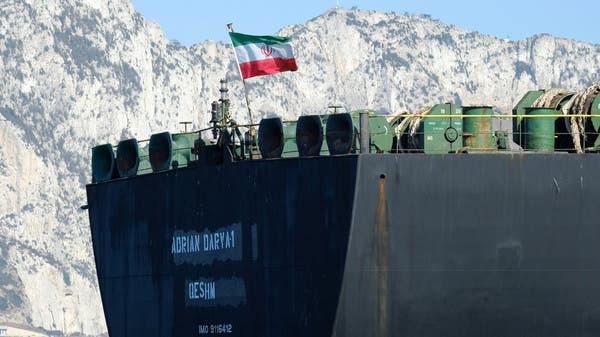
The American measures over the past years reveal the existence of a vast external structure for marketing Iranian oil, relying on companies, commercial fronts, ships, brokers, and financial networks to transport crude and conceal its source. The U.S. Treasury Department stated in March 2025 that Bakandjad was overseeing oil exports worth billions of dollars, and that the Ministry of Oil allocated quantities of oil to the Iranian armed forces, including the Revolutionary Guard and law enforcement forces, at a time when Tehran relied on a shadow fleet and companies and brokers to transport oil, particularly to China.
In subsequent measures, the U.S. Treasury revealed networks of shell companies, brokers, and the "shadow fleet" ships used to transport Iranian oil and conceal its source, including ship-to-ship transfers, changing shipping documents, and manipulating vessel identification data.
This means that the oil brokerage system does not operate in a vacuum, but rather represents part of a larger structure of the parallel Iranian economy, where oil trade intersects with maritime transport networks, currency exchange and remittance companies, foreign commercial fronts, state institutions, and military and security agencies.
The most controversial aspect of the issue came from within the political system itself, when former Iranian Communications Minister Mohammad Javad Azari Jahromi spoke about individuals who financially benefited from oil sales through broker networks transferring part of the Iranian regime's funds to the former regime's crown prince, Reza Pahlavi.
The significance of this claim, if proven true, lies in its potential to elevate the issue from a level of financial corruption to a level of political conflict over the future of Iran.
The importance of Azari Jahromi's statements also lies in the fact that he did not limit himself to discussing the funds, but raised a direct question about why those responsible for these networks have not been held accountable, despite the higher authorities in the system knowing their identities and activities, and he questioned how networks that have previously compromised financial integrity could be reused in highly sensitive circumstances.
If it is proven that part of the funds resulting from Iranian oil trade actually reached Reza Pahlavi, this opens a dangerous political door in addition to the financial aspect, as directing funds that originally came from the oil sales system to a figure around whom the Iranian opposition is divided could practically serve to fragment the opposition ranks and weaken its ability to build a united front against the regime.
Mohsen Bakandjad's resignation on October 5, 2026, marked the first resignation of a minister from Masoud Bezhakian's government since its formation, according to Iranian reports, while Hamid Bourd, the CEO of the National Iranian Oil Company, temporarily took over the duties of the Ministry of Oil.
The resignation itself does not prove Bakandjad's involvement in corruption networks, and the real reason for the resignation has not been revealed beyond the official narrative that speaks of personal reasons. However, its timing, following the escalation of the debate over oil funds, intermediary networks, and parliamentary and judicial investigations, gives it a political and economic significance that cannot be ignored.
The United States also imposed sanctions on Bakandjad in March 2025, stating that during his tenure, the Ministry of Oil allocated quantities of oil to the Iranian armed forces, at a time when Tehran was increasingly relying on unconventional networks to export oil and conceal shipment movements.
But the most important issue is not just how much oil Iran can sell despite the sanctions, but what happens after the sale is completed.
Even when Tehran succeeds in bypassing the sanctions and delivering oil to the buyer, the question remains: What is the value of the sold oil? How much actually reaches the state? How much goes to commissions, intermediary costs, shipping, and conversion? And how much money remains stuck abroad? Who monitors the difference between the shipment's value and the revenue that returns to the Iranian treasury?
Iran has massive reserves of oil and gas, but the Iranian citizen is simultaneously facing rising prices for food, housing, and medicine, a decline in purchasing power, and a continuous deterioration in the value of the currency.
Therefore, the Iranian economic crisis cannot be explained by sanctions alone. Sanctions create conditions that push the state to use unconventional channels, but the lack of transparency, the multiplicity of decision-making centers, and the transformation of intermediaries into wealthy and influential figures are all factors that multiply the cost borne by Iranian society.
In this context, the issue of oil intermediaries does not seem to be just a story about money that has not returned to Iran, but rather about an economic model that emerged under sanctions and gradually became part of the power structure itself.
Ultimately, the issue is not just about Mohsen Bakandjad alone, nor a specific intermediary, nor even the $11 billion that is said to be held by the intermediaries. The issue is a complete system that has emerged around oil trade under sanctions, where the oil wealth, which is supposed to represent a public resource for the Iranian people, flows through closed channels with multiple centers of power and interests.
When oversight and judicial institutions acknowledge the existence of billions of dollars with intermediaries, open dozens of cases, and at the same time accusations arise linking some of these networks to security and military centers, and then claims emerge about directing part of the funds to political activities outside the system, the question is no longer just: Where did the oil money go?
Rather, the more important question has become: Who truly holds the decision-making power in Iranian oil, who monitors the networks that sell it, and to whom do the billions of dollars resulting from it ultimately belong?
This is the essence of the crisis: sanctions may explain why Iran was forced to create unconventional ways to sell oil, but they do not solely explain why these methods have turned into such a large parallel economy, and why the oil money itself has become a point of contention among networks and centers of influence within the system?
Suggested
Read also
 Sports
Arsenal Announces Arteta's Continuation.. And This is the Duration of the New Contract
 Sports
Saudi Arabia and the Reasons Behind Winning the Gulf Cup.. What are the Main Gains for the UAE from the Tournament?
 Politics