The Houthis are developing an advanced missile using Chinese components
Listen to the article. The audio text is automated, generated by an automated system
New Face 24
·4 دقائق read
Listen to the article. The audio text is automated, generated by an automated system
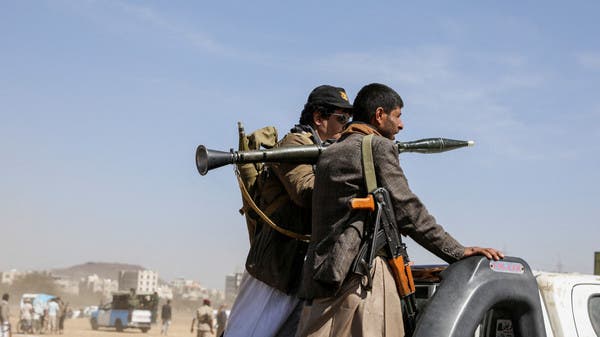
A new report revealed that the Houthi militias in Yemen are seeking to manufacture advanced medium-range ballistic missiles locally using components supplied from China.
The Conflict Armament Research organization, which specializes in tracking weapons and their supply chains in conflict zones, revealed that the Houthis imported from a Chinese supplier a set of components needed to produce a copy of one of the most powerful Iranian missiles, the precision-guided “Khyber Shekhan” missile. The Houthi missile's range is expected to reach about 1,200 miles (nearly 1,900 kilometers).
Note that Iran had used the "Khyber Shekhan" missile, a low-cost, mobile, and highly accurate weapon that was first displayed in Tehran in 2022, against American bases during the war with the United States last spring, according to the Wall Street Journal. The Khyber-Shakan missile is considered more effective than other Iranian missiles due to its ability to maneuver to evade air defense systems. In some versions, the nose of the missile carrying the warhead separates during the final phase of flight, and uses a small motor to adjust the trajectory as it approaches the target at speeds of up to 6,000 miles per hour, according to analysts and officials.
The Conflict Armament Research report was based on information provided by the Yemeni authorities last July after the interception of two shipments last year, which contained missile equipment hidden among other goods.
In this context, Fabian Hintz, a senior analyst at the organization, said: “When you see imports like this, there is a possibility that they are already manufacturing these missiles or are trying to do so.” He added that the Houthi military facilities are largely camouflaged, making it difficult to determine the extent of progress they have made in production.
Meanwhile, Mohammed Al-Basha, founder of the Washington-based risk advisory firm Basha Report, believed that the Houthis have become more independent and capable of manufacturing their own weapons after years of relying on Iran and its Lebanese ally, Hezbollah. He pointed out that Tehran had been sending missiles to the Houthis for years to reassemble and use.
He added: “They have developed local manufacturing capabilities, including the use of artificial intelligence in drone and missile software, diversified their supply chains, accumulated operational expertise, and established relationships with regional smuggling networks and international procurement networks.”
For his part, Henry Thompson, a former expert on the UN Sanctions Committee on Yemen, pointed out that there is evidence that the Houthis have been importing components for solid-fuel ballistic missiles from China for at least two years.
While Michael Knights, research director at strategic consulting firm Horizon Engage, said that the presence of Chinese components in Houthi ballistic missiles shows that Beijing “does not have the will or ability to control the final destination of its dual-use technologies.”
This information comes even though the Houthis are on the US terrorist list and subject to a UN arms embargo, but in recent years they have expanded their relations with China and other suppliers.
United Nations reports and data from weapons experts also indicated that Chinese companies have become the largest source of confiscated goods destined for the Houthis.
The data also showed that most of the suppliers of drone parts that the United States imposed sanctions on because of their dealings with the Houthis are located in China.
On the other hand, China confirmed that it adheres to the United Nations ban on selling weapons to the Houthis.
Last year, the United States accused a Chinese company of helping the Houthis carry out attacks against American ships in the Red Sea. The imported components included metal parts manufactured specifically for the missiles, including parts of the engine and the main structure of the missile, in addition to fins for in-flight stabilization and components for a solid-fuel rocket engine from the “Khyber Shekhan” series of missiles.
The Yemeni authorities also confiscated tools, testing equipment and raw materials, including insulating materials that protect the missile parts from the intense heat resulting from ballistic flight.
Suggested
Read also
 Sports
The reason for the "honeymoon": a sarcastic argument between Mourinho and a journalist before the Real Madrid-Roma match
 World
WorldImad Gad talks about information about the killer of Egyptians in Sudan
 World
World